Blog
Think Before You Share: A Simple Guide to Spotting Misinformation
Audience & Purpose
We live in a time where information moves fast, especially on social media. Platforms like Facebook make it easy to scroll, react, and share without really thinking about what we’re looking at. Not everyone grew up learning how to navigate online spaces critically, which makes it easier for misleading or false information to spread. Because of this, it’s important to have simple, practical ways to slow down and think before engaging with content online.
Method
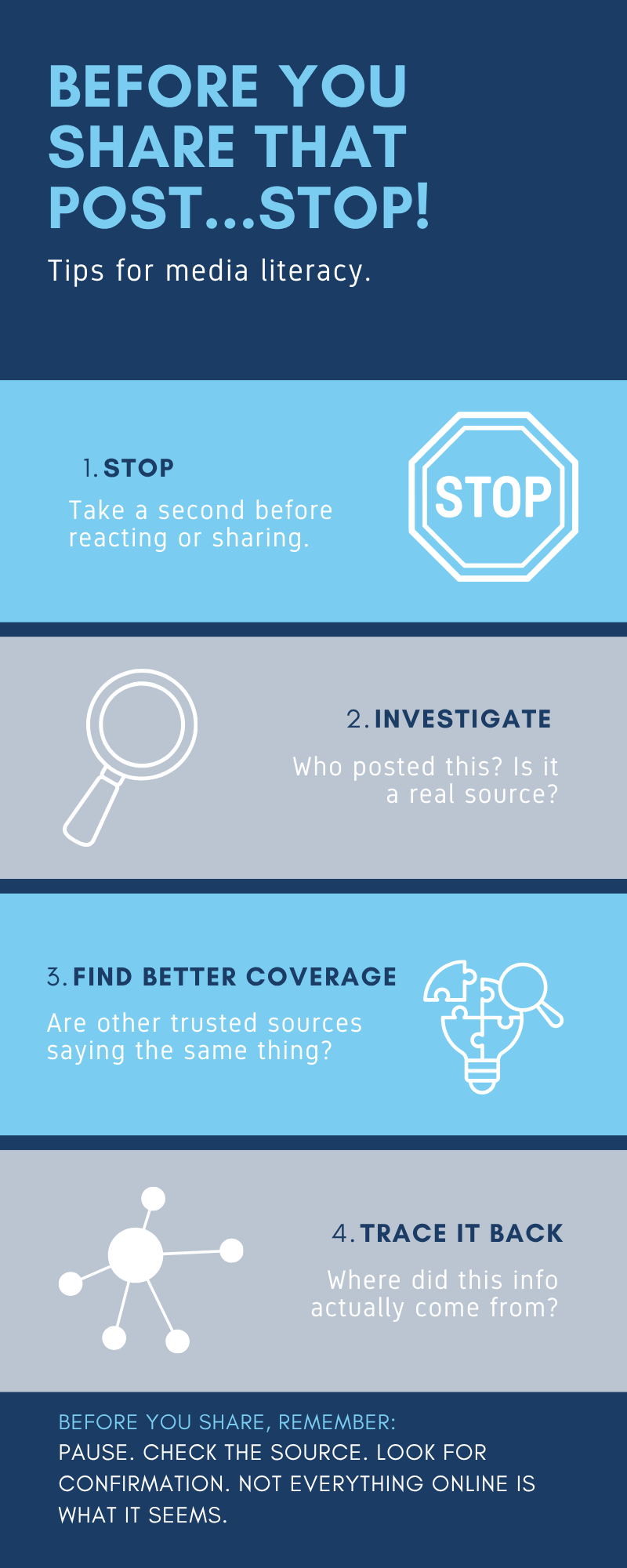
This infographic is designed specifically for older adults (ages 46–61) who actively use social media. Many users in this group may not have had formal exposure to digital media literacy and may rely more on trust when engaging with posts. Since social media encourages quick scrolling and fast reactions, this audience can benefit from clear, direct guidance that is easy to understand and apply in everyday situations.
Why Infographics work
To make this information as simple and useful as possible, I used the SIFT method. SIFT stands for Stop, Investigate the source, Find better coverage, and Trace claims back to the original context. This method is especially effective because it gives users a clear set of steps to follow instead of overwhelming them with too much information. It encourages people to pause before reacting and to think more critically about what they see online.
At the end of the day, preventing misinformation doesn’t require being an expert, it just requires slowing down and asking a few simple questions. Even taking a few extra seconds to think before sharing can make a big difference. The goal of this project is to give everyday users the tools they need to feel more confident navigating the online world.
Sources
Library guides: Evaluating resources and misinformation: The SIFT method. The SIFT Method - Evaluating Resources and Misinformation - Library Guides at UChicago. (2025, June 30). https://guides.lib.uchicago.edu/c.php?g=1241077&p=9082322
Eddy, K., & Shearer, E. (2025, October 29). How trust in info from news outlets and social media has changed over time. Pew Research Center. https://www.pewresearch.org/short-reads/2025/10/29/how-americans-trust-in-information-from-news-organizations-and-social-media-sites-has-changed-over-time/
Wait…Is This Even True? Misinformation on TikTok & X
Apr 19
If there’s one thing about me, it’s that I’m chronically online. I grew up with the internet, I use social media daily, and I’ve learned how to navigate it in a way that a lot of people didn’t get the chance to. Being media literate didn’t just happen, it came from experience, exposure, and honestly, trial and error. Because of that, I feel like I can spot misinformation pretty quickly. But not everyone can. That’s where platforms like X (formerly Twitter) and TikTok come in. Both have made efforts to reduce misinformation, but from what I’ve seen, those efforts don’t always hit the way they’re supposed to.
This blog looks at how X and TikTok try to control misinformation, how effective those strategies actually are, and what still needs to change based on both research and my own experience using these platforms.
X (Twitter) and Community Notes
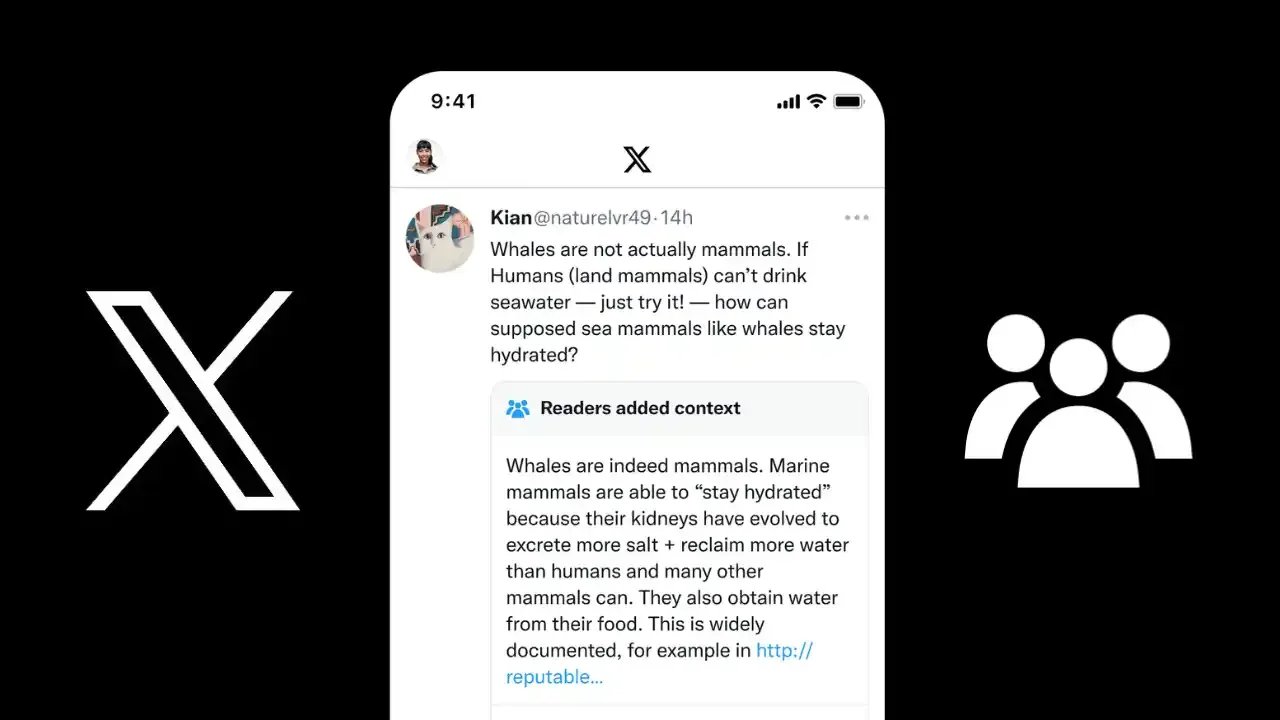
X has gone through a lot of changes recently, but one of the most interesting tools it uses to fight misinformation is Community Notes. Instead of relying only on internal moderation or third-party fact-checkers, Community Notes allows users to add context to posts that may be misleading. These notes are then rated by other users, and if they’re considered helpful, they become visible under the original post.
On paper, this is actually a smart idea. It crowdsources fact-checking and gives users more context instead of just removing content completely. I’ve seen this in real time, someone posts something that’s slightly misleading or missing context, and then a Community Note shows up underneath explaining what’s actually going on, often with sources attached. It doesn’t delete the post, but it gives you enough information to question it. From my perspective, this works better than traditional fact-checking in some ways. As someone who is already media literate, I don’t need content removed for me, I just need context. Community Notes gives that extra layer without feeling like censorship. It also feels more transparent since it’s not just the platform deciding what’s true or false.
That being said, it’s not perfect. The biggest issue is that it relies heavily on users. If no one adds a note, or if it takes too long to get approved, misinformation can still spread quickly. And knowing how fast people on X move, it will already have been too late. By the time a Community Note shows up, the tweet might already have thousands of likes and reposts. Also, not everyone reads the notes. If someone already agrees with a post, they might ignore the correction completely. To improve, X could focus on speeding up how quickly Community Notes appear, especially on posts that are gaining traction. It might also help to make the notes more visually noticeable so they don’t get overlooked. Overall though, this is one of the more effective tools I’ve seen because it focuses on adding context instead of just removing content.
TikTok and In-Video Warnings
TikTok takes a different approach. Instead of crowdsourcing context, it relies more on platform controlled moderation. One thing that stood out to me, especially during Covid and election cycles, was the use of those grey banners at the bottom of videos. You’d be watching a video, and suddenly there’s a small message that says something like “Learn more about Covid-19” or directs you to official election resources.
I remember seeing these all the time. It didn’t matter what side of TikTok you were on, those banners were everywhere. The idea was to provide users with accurate information without interrupting the experience too much.
In theory, this is a good approach. It keeps users informed while still letting them engage with content. But in reality, it’s easy to ignore. And I’m saying that as someone who knows better. Even being media literate, I’m not stopping mid-scroll to click on a grey banner at the bottom of my screen. If I’m not doing it, I know a lot of other people aren’t either. That’s the main issue with TikTok’s strategy, it’s too passive. The platform doesn’t really slow down the spread of misinformation; it just adds a small disclaimer and keeps things moving. And with how fast TikTok content spreads, that’s not enough. I’ve seen videos go viral with questionable claims, and even if a label gets added later, the damage is already done.Another problem is how the algorithm works. TikTok pushes content based on engagement, not accuracy. So if something is entertaining or emotional, even if it’s misleading, it’s more likely to blow up. That makes it harder for moderation efforts to keep up.
To improve, TikTok needs to be more aggressive in how it handles misinformation. Instead of subtle banners, they could use more direct interruptions, like full-screen warnings or limiting the reach of content until it’s verified. Right now, it feels like they’re trying to address misinformation without disrupting the user experience too much—but that balance isn’t working.
Do These Strategies Actually Work?
Looking at both platforms, it’s clear they’re trying, but the results are mixed. X’s Community Notes are more effective for people who are willing to read and think critically, while TikTok’s approach feels more like a surface-level fix. From my experience, the biggest issue isn’t just the platforms, it’s how people use them. Social media is built for speed. People scroll fast, engage quickly, and don’t always question what they’re seeing. Even with tools in place, misinformation can still spread because users don’t take the time to process the information in front of them.As someone who is chronically online and media literate, I’ve learned to pause and question things. But I also recognize that not everyone does that. That’s why platform responsibility still matters.
What’s Missing and What Needs to Change
The biggest thing missing from both platforms is prevention. Most of these strategies react to misinformation after it starts spreading instead of stopping it early. Platforms need to focus more on slowing down virality, especially for content related to serious topics like health and politics. Another improvement would be making warnings harder to ignore. Whether it’s Community Notes or TikTok banners, these features need to stand out more. If users can easily scroll past them, they’re not doing their job. Finally, there needs to be a stronger focus on digital literacy. Platforms can only do so much. At some point, users need to be able to think critically about what they’re seeing. Not everyone grew up with the internet the way I did, and that gap is a big reason why misinformation continues to spread.
Conclusion
At the end of the day, platforms like X and TikTok are making efforts to reduce misinformation, but they’re not fully solving the problem. Tools like Community Notes and in-video warnings are steps in the right direction, but they’re not enough on their own. Misinformation spreads fast, and current strategies aren’t keeping up. Moving forward, platforms need to focus on being more proactive, more visible, and more aligned with how people actually use social media. Until then, misinformation will continue to be something users have to navigate on their own—whether they’re media literate or not.
Evaluating the Claim: Lady Gaga’s “Total Mayhem” Release
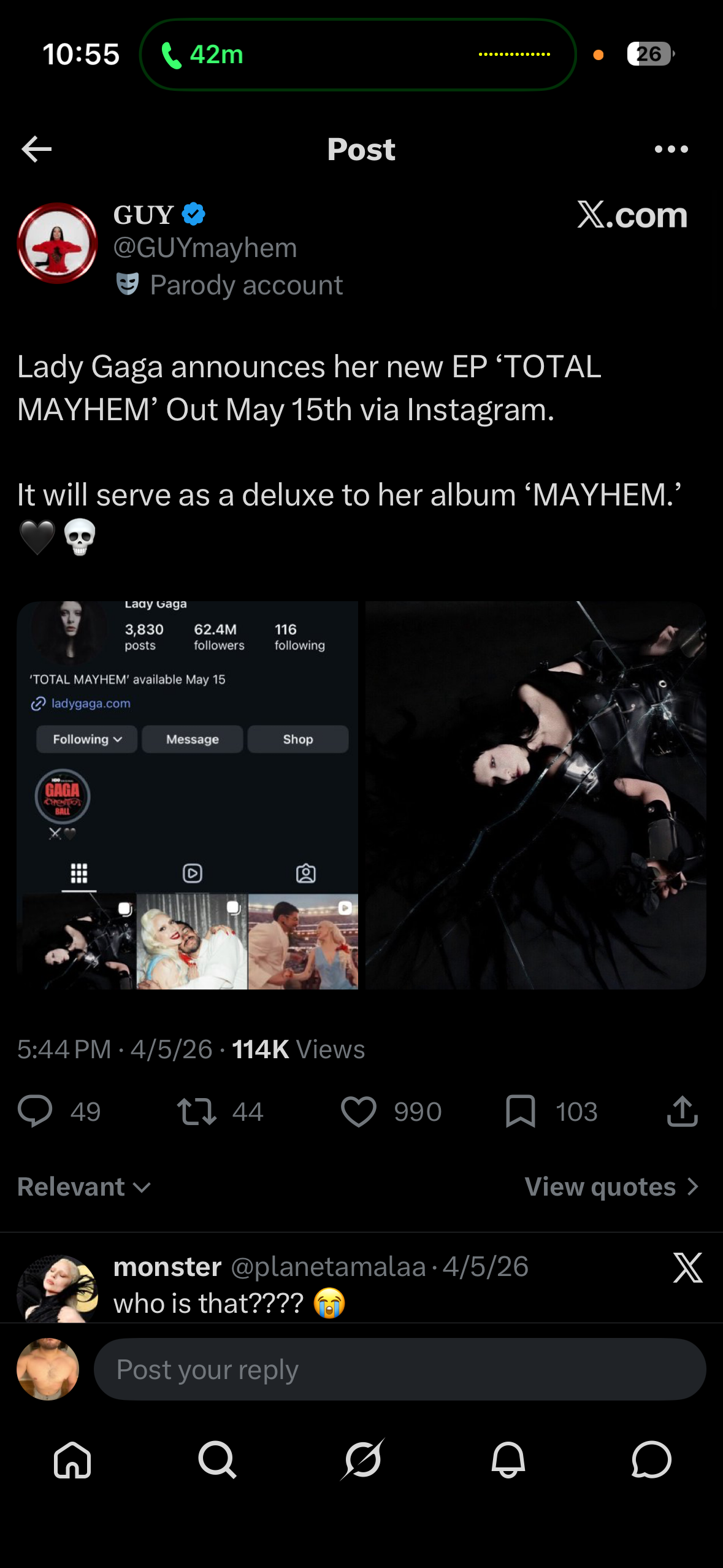
I came across a post on X (Twitter) claiming that Lady Gaga was releasing a new EP called ‘Total Mayhem’ on May 15th. As a fan of Lady Gaga, this immediately caught my attention and got me excited. However, something about the post didn’t feel completely right. It seemed like a big announcement, but I hadn’t seen anything about it anywhere else, which made me a little skeptical.
The first thing I did was pause and actually look at the post more closely instead of just believing it. One of the biggest red flags I noticed was that the account was labeled as a “parody account.” This immediately made me question the credibility of the information because parody accounts are not official sources and are often meant for humor or entertainment rather than accurate news.
Next, I checked the source itself. The username and content did not match Lady Gaga’s official social media accounts @LadyGaga. If this were a real announcement, it would most likely come directly from Lady Gaga’s verified accounts or from her record label, Interscope Records. The fact that it didn’t already make the claim seem less trustworthy.
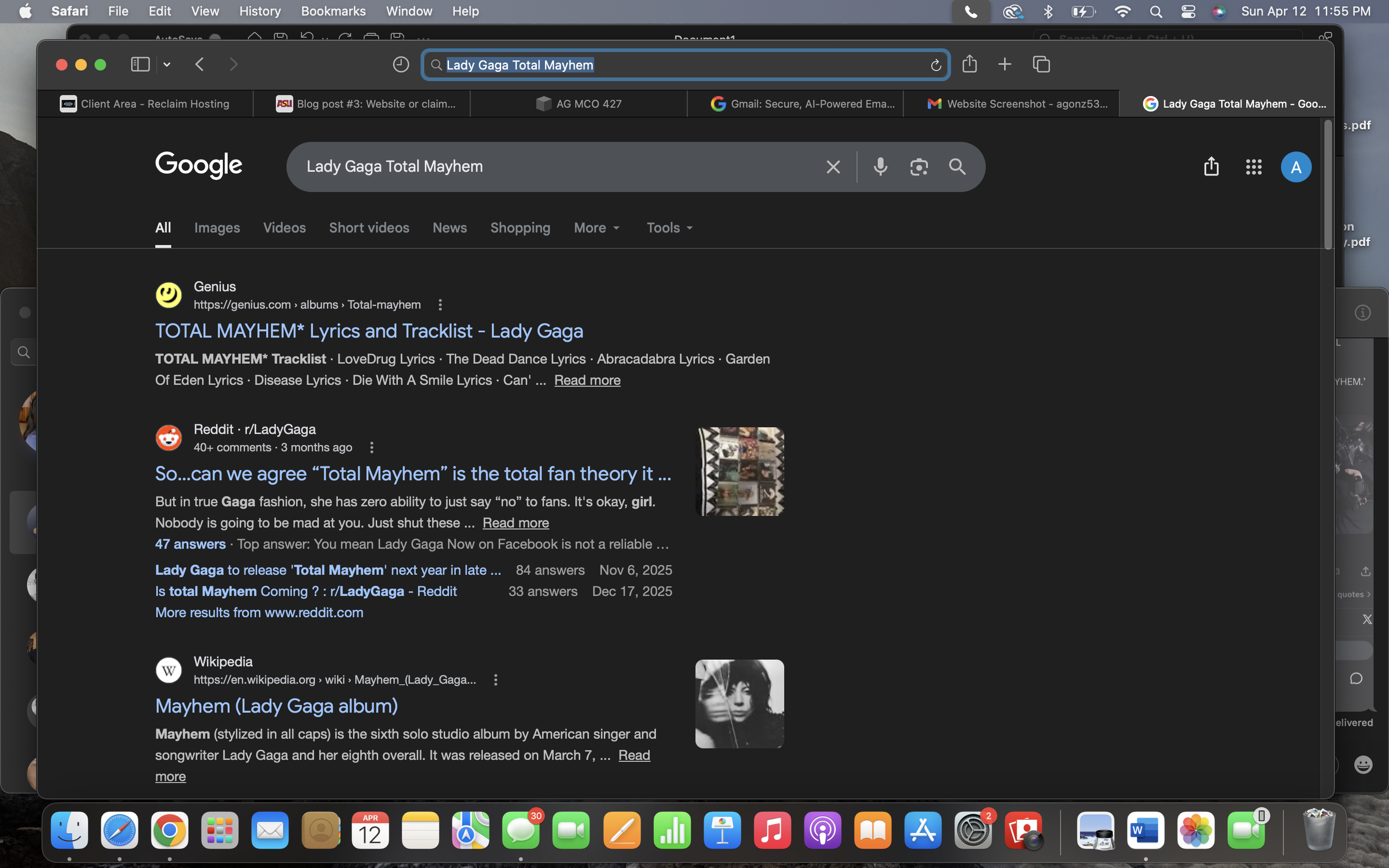
After that, I moved on to lateral reading by searching the claim on Google. I typed in “Lady Gaga Total Mayhem release date” to see if any reliable sources were reporting the same information. The results showed no credible news confirming a new EP release. Instead, I found information about her album Mayhem, which had already been released previously. This showed that the post might be using existing information and twisting it to seem new.
I then compared multiple sources to confirm what I was finding. Reliable sources like music news sites and official artist pages did not mention anything about a new EP called Total Mayhem. This consistency across credible sources reinforced the idea that the claim was false.
Another important step was identifying misinformation tactics. The post used confident language like “Lady Gaga announces…” which can make it seem official even when it is not. It also included edited visuals that looked like they could be from her real Instagram, which could easily mislead people into believing it is real. This is a common tactic used in misinformation to make content appear more credible than it actually is.
After going through all of these steps, I concluded that the claim is false. Lady Gaga is not releasing a new EP called Total Mayhem this weekend, and the post originated from a parody account that is not a reliable source of information.
This process showed me how easy it is to believe something online, especially when it involves a celebrity or something exciting. It also reinforced the importance of taking a few extra minutes to verify information before trusting or sharing it. By checking the source, comparing multiple sources, and recognizing red flags, anyone can avoid spreading misinformation and make more informed decisions about what they see online.